How It Began
It was November 5th, 2024, the day of the first presidential election I was able to vote in, and roughly 3 months after I realized I wanted to pursue medical transition. I waited with bated breath to see if the people of the United States were that determined to erase my existence.
And then I mourned for about a week. And I thought about how this might be the end. And I determined that, if it was the end, I want to go out fighting.
After that week, I found solace in the idea of spreading awareness. I'd heard so many people around me spitting vitriol about folks like me, my own coworkers shouting about it mere feet away from me, none the wiser that one of those "dirty transgenders" was one of their dear acquaintances. I thought about the way that hatred was normalized, especially in small communities, and how that made being a small-town queer feel so lonely. I figured there should be a symbol, something that could be made into a sticker: big enough to be seen from the street, but small enough to be easily placed.
All this time, one song kept popping up in my song queues: "Pink Pony Club" by Chappell Roan. The first third kept echoing in my mind:
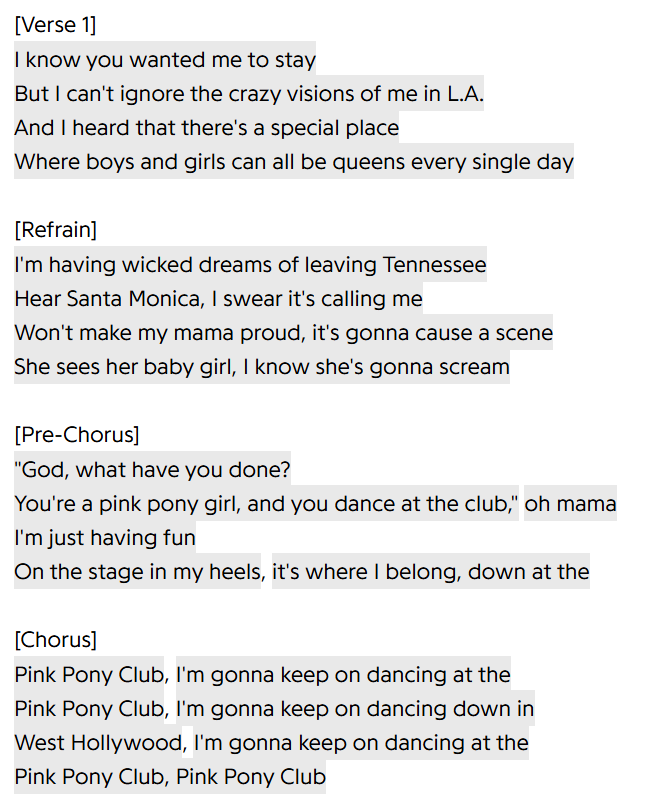
I'm not sure where the idea of the Pink Pony being a plush horse specifically came from. I know I wanted something cute and playful, something that would make anyone starting fuss about it seem absolutely irrational, that could create plausible deniability ("I don't see what all the fuss is about, it's just a toy horse"), but the ones who needed the message the most would get it instantly. They would see these tiny cartoon horses popping up in small conservative towns after the federal election of a man who boasted about eradicating freaks like themselves, and they would see the message clear as day:
"We're gonna keep on dancing"
My design was finalized and printed on tens of vinyl stickers, which later tests confirmed were clearly seen from street-side distance, easy to remove and replace, and basically waterproof. Unfortunately, as I was also a college student with a job, it took me forever to actually get them out there, so I turned to friends and acquaintances I could trust. Now, this design can be found across lightpoles in small towns and cities alike, distributed for the community by the community.
Nowadays, as I pursue my career and work towards moving out, the future of this project is as uncertain as my own. That's why I decided to start this webpage, explaining the goal of the Pink Pony and giving more people the chance to get their hands on them. I hope this will at least help get the word out and inspire more people to keep on dancing.